


By SupplementenscannerHow we compare
One seed coat, four packs, and a pharmacy synonym
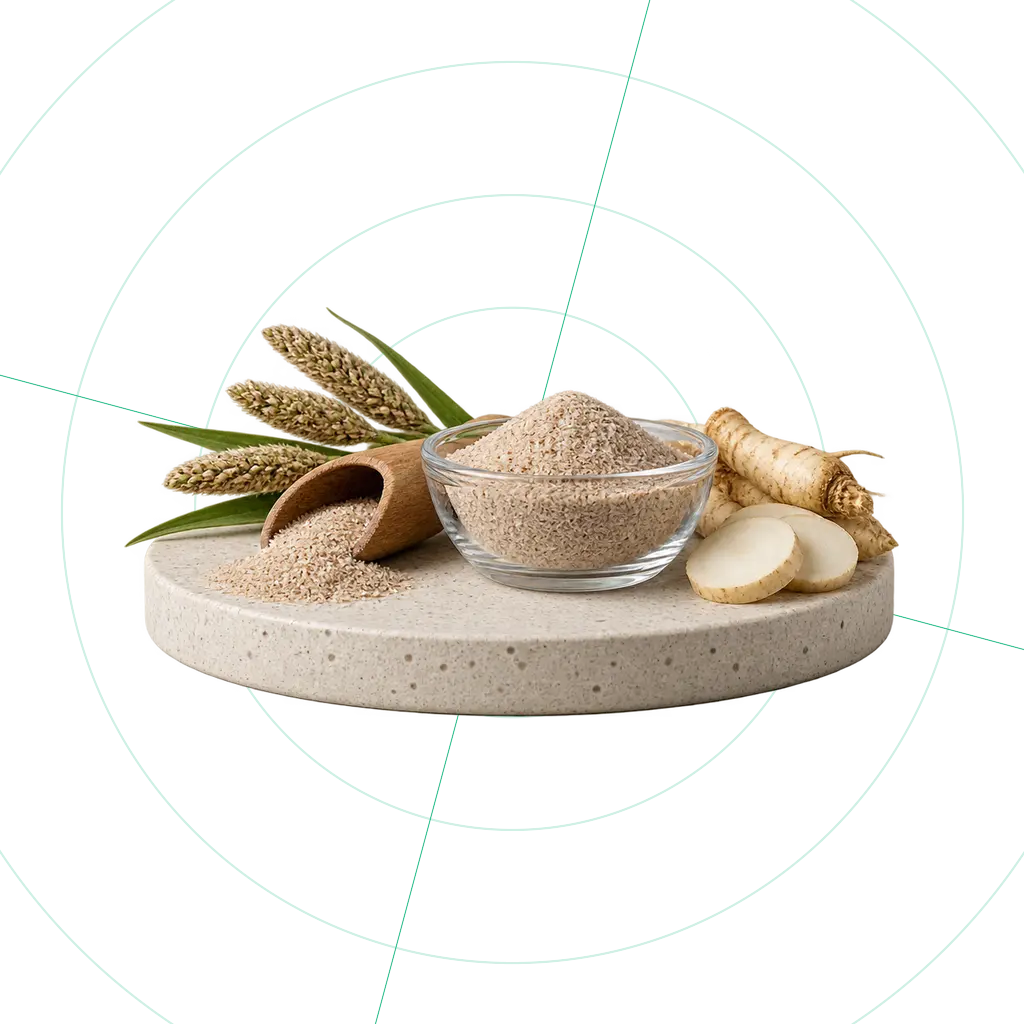
The husk is the whole seed coat, the powder is that coat milled finer, and a capsule holds milligrams of it: a jar might print 500 milligrams per capsule and a serving of three capsules, where a tub prints a scoop in grams instead. Tablets are the fourth pack, and capsule and tablet searches carry real British volume, so the format question is not a detail.
Psyllium is found by name, having no category behind it, so the whole pack's price is what stands beside it, and that list is ordered on exactly that amount, cheapest pack first, rather than on what the pack holds. The same tub can also appear inside fibre, which is ranked per serving.
What the nutrition panel settles that the front of the pack cannot
A fibre pack states fibre per 100g, and packs that declare a serving state fibre per serving too. Husk, finely milled powder and a mixed preparation fill that row with different numbers, so two tubs of equal weight are not equal purchases. "Highest fibre supplement" is a British search with volume behind it, and that row is the only place on the pack that answers it. Soluble and insoluble name a type of fibre rather than a dose, so no price reflects the difference.
Within the fibre category a tub that states its net weight gets a per-serving price; a jar of capsules gets one only when the listing itself carries a serving count. Doses are not levelled and there is no filter on dosage anywhere, so that part is yours to read. Konjac glucomannan is the fibre counted in capsules rather than scoops, and those jars turn up on weight loss.
Inulin by weight, digestive enzymes in activity units
Inulin is a chicory-root powder, often sold with FOS on the same ingredients list and searched for under "prebiotic fibre" as well as its own name. Like psyllium it is found by name, so the pack price stands and the division by weight is yours.
An enzyme label works in nothing like milligrams. Each enzyme carries an activity unit: DU for amylase, HUT for protease, FIP for lipase, ALU for lactase. A capsule printing 23,000 DU of amylase and 80,000 HUT of protease is stating two measures that cannot be summed, and two jars are read unit against matching unit. Enzymes have no category either, so the price of the box is what stands.
Probiotics are ranked on a strain name and a CFU count
Probiotics are the other very large British search here, and they are ranked per capsule. The CFU count is the figure people compare, and it is worth reading twice: first for the asterisk that says whether it holds at manufacture or through the expiry date, then for the code after the species name. That code is the strain designation, and without it a jar has only named a species, which is a broader thing than what is inside it. The same capsules appear on immunity.
Greens powder is ranked per serving, on a scoop in grams and a long ingredients list that differs by brand. L-glutamine is the only powder here compared by the kilo, sold both as a weighed bag and as capsules dosed in milligrams, and the capsules earn a kilo price only when the label declares a net weight.
Where a shop name lands in the arithmetic
Boots, Holland & Barrett and Tesco trail the plain psyllium and fibre terms, and none of the three is read here. No merchant sets the seed coat, the milligrams or the panel row. What a merchant does set is the price, and since that is the variable, it is kept per seller: a tub sold in two places stays two priced rows rather than one averaged entry.
That leaves the words on the front, and how little they fix is set out in reading a supplement label.